Bridging Theory and Practice in Domestic Violence Intervention
This final chapter (with a total of 4 parts), is the practical application component of our discussion on AI-guided domestic violence intervention. Throughout these chapters we have engaged with theoretical frameworks, ethical considerations, and technical foundations that underpin the responsible development of AI systems in the sensitive domain of domestic violence prevention and intervention. These worksheets represent the bridge between theory and practice—a structured approach to applying this knowledge to real-world challenges.
Domestic violence remains one of society's most persistent and complex problems, affecting millions across diverse backgrounds and circumstances. While technology alone cannot solve this deeply human issue, thoughtfully designed AI systems have the potential to enhance prevention efforts, improve intervention strategies, and provide better support for survivors. However, this potential comes with significant responsibility.
These worksheets are designed to help you navigate the multifaceted challenges of developing AI systems in this domain.
Ethical Framework Assessment: Before any line of code is written or any algorithm deployed, we must establish robust ethical guardrails. This worksheet guides you through a comprehensive ethical analysis that centers on the needs and safety of survivors while considering potential unintended consequences.
Stakeholder Analysis: Effective AI systems in domestic violence intervention must serve diverse stakeholders with sometimes competing needs. This worksheet helps to map the complex ecosystem of individuals and organizations that interact with domestic violence intervention systems.
Data Requirements and Privacy Considerations: The collection, storage, and use of data in domestic violence contexts presents unique challenges that go beyond standard privacy considerations. This worksheet helps to design data practices that prioritize both safety and privacy.
As you progress through these worksheets, remember that they are not merely academic exercises. Each decision you document represents a choice that could significantly impact real people in vulnerable situations. This work should be approached with both intellectual rigor and empathy, understanding that behind every data point is a human story.
Every stakeholder’s task is to engage thoughtfully with these frameworks, adapting them to specific use cases and contexts. The goal is not to produce a perfect system design in one attempt, but rather to develop the habit of systematic, ethical analysis that will serve as a foundation in developing AI-guided technological solutions to complex social problems.
How to Use These Worksheets
Collaborative Approach: While individual reflection is valuable, these worksheets yield the richest insights when completed collaboratively with diverse perspectives. Consider forming small groups that represent different disciplinary backgrounds and lived experiences.
Iterative Process: The first pass through these worksheets will likely raise as many questions as it answers. This is expected and valuable. Plan to revisit and refine the analyses as new insights are gained.
Real-World Grounding: Whenever possible, ground the analysis in real-world examples and evidence. Connect with domestic violence advocates, review research literature, and consider the documented experiences of survivors.
Documentation: The completed worksheets will serve as documentation of your decision-making process, which is a critical component of responsible AI development. Be thorough in the justifications and transparent about areas of uncertainty.
Upon beginning this work, remember that the most sophisticated technology is worthless—or even harmful—if it doesn't center the needs, experiences, and agency of those it aims to serve. Let this principle guide the approach to these worksheets and the systems you may one day help develop.
Worksheet 1: Ethical Framework Assessment Tool
This assessment tool provides a structured approach to evaluate the ethical dimensions of an AI system designed to prevent and address domestic violence. It is intended to be used throughout the development lifecycle, from conception and design through implementation and ongoing evaluation.
A. Foundational Principles Assessment
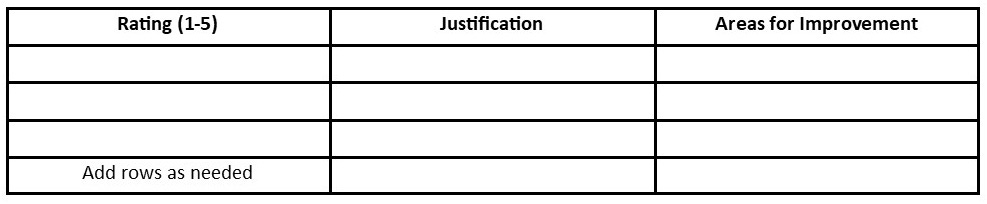
Rate the system's alignment with each core ethical principle on a scale of 1-5 (1=Poor, 5=Excellent), and provide justification. Use the same rating table for each of the following seven elements.
1. Autonomy & Agency
Definition: Respects and enhances the ability of individuals to make informed choices about their own lives.
Guiding Questions:
Does the system prioritize victim choice and control?
Are there opt-in/opt-out mechanisms that are easily accessible?
Does the system adequately explain its functions and limitations to users?
How does the system handle situations where autonomy might be compromised (e.g., coercion)?
2. Beneficence
Definition: Actively promotes the wellbeing and safety of individuals affected by domestic violence.
Guiding Questions:
How does the system define and measure "benefit" to those it serves?
Is there evidence that interventions recommended by the system improve outcomes?
Does the system prioritize immediate safety while also supporting long-term wellbeing?
Are benefits distributed equitably across different populations?
3. Non-maleficence
Definition: Avoids causing harm through either action or inaction.
Guiding Questions:
What potential harms could result from false positives/negatives?
Could the system be weaponized by abusers?
How are risk assessments communicated to avoid creating additional danger?
What safeguards exist to prevent system misuse?
4. Justice & Fairness
Definition: Ensures equitable treatment and fair distribution of benefits and burdens.
Guiding Questions:
Does the system perform consistently across different demographic groups?
Are resources and interventions allocated equitably?
Does the system account for structural inequalities that affect domestic violence?
How are trade-offs between competing interests decided?
5. Privacy & Confidentiality
Definition: Protects sensitive information and respects boundaries around personal data.
Guiding Questions:
How is sensitive data collected, stored, and shared?
What controls do individuals have over their own data?
How are privacy and safety balanced when they conflict?
What happens to data when someone exits the system?
6. Transparency & Explainability
Definition: Makes decision processes understandable and open to scrutiny.
Guiding Questions:
Can stakeholders understand how the system makes recommendations?
Are limitations and uncertainty levels clearly communicated?
Is documentation accessible to both technical and non-technical stakeholders?
How are model updates and changes communicated?
7. Accountability
Definition: Establishes clear responsibility and oversight mechanisms.
Guiding Questions:
Who is responsible when the system makes errors?
What appeal or redress mechanisms exist?
How is system performance monitored and evaluated?
What independent oversight exists?
B. Contextual Assessment
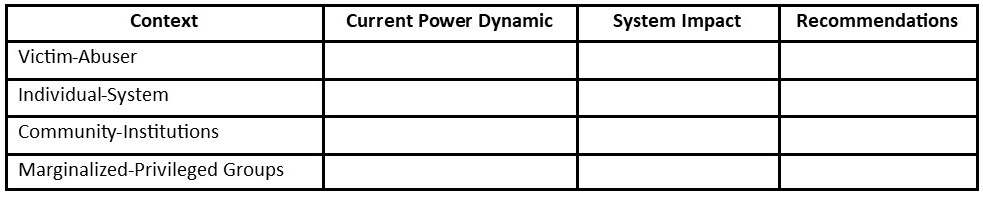
1. Power Dynamics Analysis
Analyze how the system addresses power imbalances.
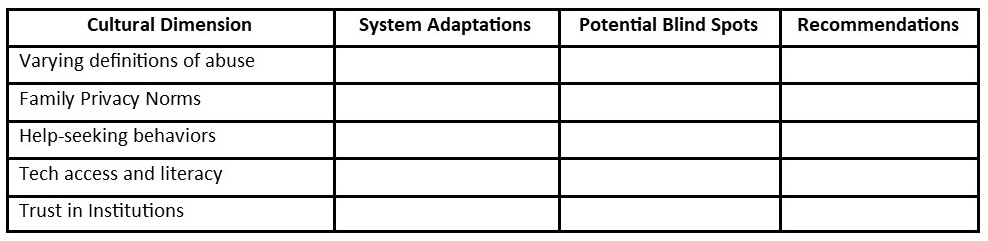
2. Cultural Context Analysis
Evaluate the system’s cultural sensitivity.
C. Technical Ethics Assessment
1. Data Ethics
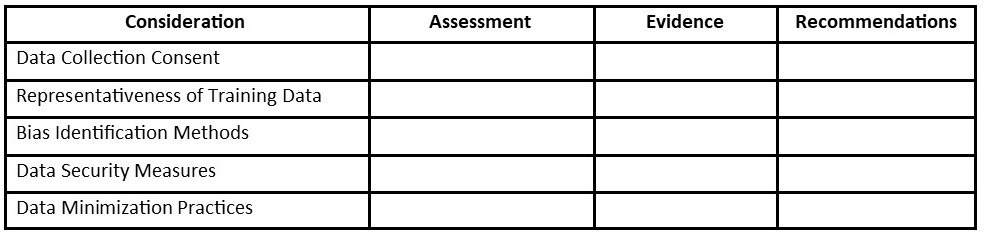
2. Algorithm Ethics
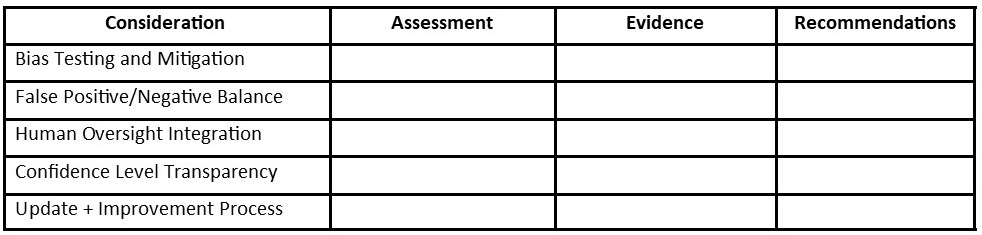
D. Implementation Ethics
1. Stakeholder Involvement
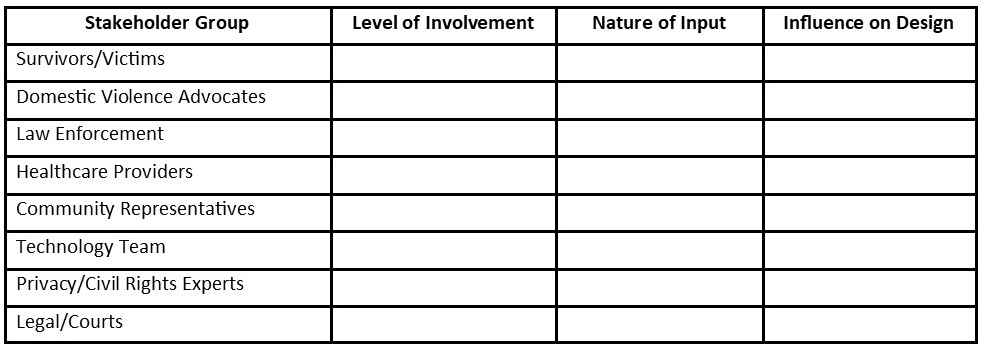
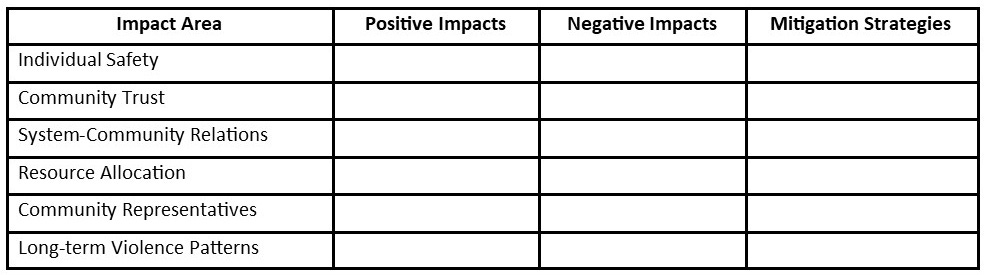
2. Impact Assessment
Evaluate potential impacts across dimensions.